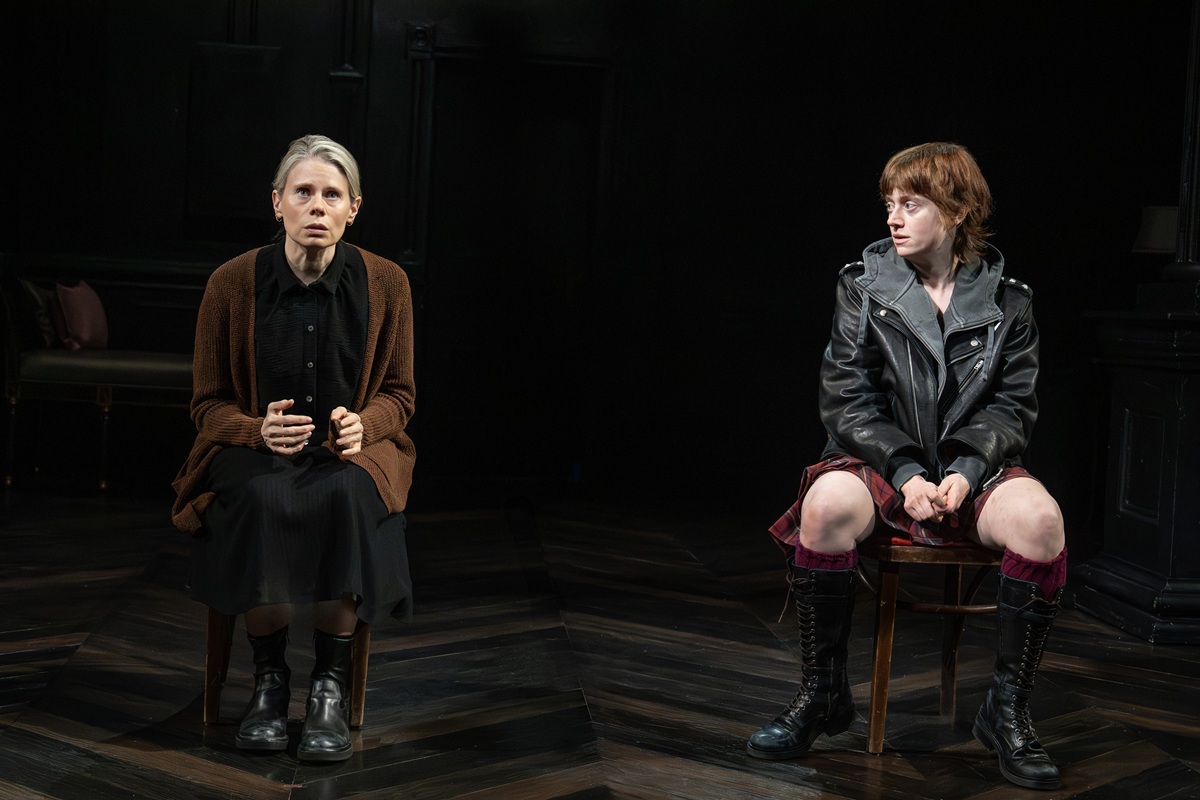
Anna Ziegler's latest theatrical triumph, Antigone (This Play I Read in High School), has captivated Off-Broadway audiences and critics alike, leading to an eagerly anticipated extension of its limited run at The Public Theater. This world-premiere play breathes new life into Sophocles' ancient tragedy, reframing its timeless questions for a contemporary audience grappling with similar moral complexities. From its compelling narrative to its stellar cast, this production has swiftly established itself as a must-see, resonating deeply with the current cultural zeitgeist.
A Timeless Tragedy Reimagined for Today
At its heart, Anna Ziegler's Antigone is an ambitious reinterpretation of one of Western literature's foundational texts. Sophocles' original play, written over two millennia ago, explored the conflict between individual conscience and state law when Antigone defies King Creon's decree and buries her brother. Ziegler, known for her incisive and emotionally resonant works, takes this powerful premise and expertly grafts it onto the landscape of modern America, creating a theatrical experience that feels both ancient and alarmingly current.
The full title, Antigone (This Play I Read in High School), subtly hints at Ziegler's approach: acknowledging the classic status while inviting a fresh, perhaps even skeptical, re-examination. This is not a mere update with contemporary slang, but a profound exploration of how an independent young woman's determination to control her own body and uphold her convictions clashes with a world still bound by archaic and often misogynist laws. This particular focus on bodily autonomy is a critical modern lens through which Ziegler examines Antigone's enduring fight. It adds a layer of poignant relevance, making the ancient struggle feel intensely personal and immediate for today's viewers.
Ziegler's Vision: Navigating Modern Moral Minefields
Anna Ziegler herself articulated her intent, stating, "I wrote this Antigone adaptation hoping to capture how absurd, painful, and deeply human it feels to navigate the moral minefields of our moment." This statement is key to understanding the play's impact. It’s a reflection on the bewildering challenges of distinguishing right from wrong, of upholding one's ethical code in a world where moral clarity often feels elusive and leadership frequently falls short.
The play delves into the nuances of moral decision-making, acknowledging the difficulty of leading others while simultaneously holding leaders accountable. It doesn't offer simplistic answers but rather prompts audiences to collectively process complex questions about justice, governance, and individual responsibility. This commitment to nuance and conversation makes The Public Theater, with its long-standing tradition of fostering civic dialogue, an ideal home for such a thought-provoking piece. The experience is designed to leave audiences with a renewed appreciation for Antigone's unwavering bravery, but also a grudging understanding of the immense burden of leadership, even amidst its failures. For a deeper dive into the specific thematic battles Antigone wages, you might find Exploring Antigone's Fight: Ziegler's Timely Public Theater Adaptation particularly insightful.
Stellar Cast and Visionary Direction Drive Success
The success of Anna Ziegler's Antigone is significantly bolstered by its exceptional cast and the masterful direction of Tyne Rafaeli. Rafaeli, known for her insightful handling of challenging texts, has channeled what made Sophocles' original so radical, crafting a singular theatrical world that skillfully bridges ancient Thebes and modern America. Her vision, as she describes it, avoids "gimmick or reduction," instead creating a nuanced tapestry that asks one of the most important questions of our time: "what is a citizen to do in the face of an unjust law?"
The production boasts an impressive ensemble, featuring Tony winners Celia Keenan-Bolger and Tony Shalhoub. Keenan-Bolger, a performer celebrated for her emotional depth and versatility, takes on the pivotal role of Chorus. Her presence grounds the narrative, guiding the audience through the moral labyrinth with profound sensitivity. Tony Shalhoub, known for his formidable stage and screen presence, embodies Creon, providing a complex portrayal of a leader grappling with power, law, and familial loyalty. Their performances, alongside the formidable Susannah Perkins as Antigone, anchor the play's emotional core, making the ancient conflict resonate with contemporary power and pathos.
The supporting cast further enriches the production: Ethan Dubin as Copy 3/Achilles, Katie Kreisler as Cop 1/Proprieter, Dave Quay as Cop 2/Palace Guard, Calvin Leon Smith as Haemon, and Haley Wong as Ismene. Each actor contributes to the layered world Rafaeli creates, ensuring that the characters, whether direct reflections of the original or modern interpretations, feel fully realized and compelling. The artistic integrity extends behind the scenes with a talented creative team, including scenic design by David Zinn, costume design by Enver Chakartash, lighting design by Jen Schriever, and sound design and music by Daniel Kluger, all contributing to an immersive and thought-provoking experience.
The Public Theater: A Fitting Home for Crucial Dialogue
The choice of The Public Theater as the venue for this world premiere is no accident. As Tyne Rafaeli passionately argues, "For the Greeks, theatre was a democratic imperative, a space for the public to collectively process their world. Today, there is no better home for this play than The Public—one of the last true civic gathering places we have." This sentiment underscores The Public's legacy as a bastion of innovative and socially conscious theatre, a place where challenging ideas are presented, debated, and absorbed by a diverse audience. It's a theatre that has consistently shaped imaginations and welcomed nuance, aligning perfectly with Ziegler's desire for the play to spark conversation and critical self-reflection.
The Public's Barbaralee Theater provides an intimate yet powerful setting for this drama to unfold, allowing the audience to feel intimately connected to the characters' struggles. This environment fosters the collective processing of complex themes, transforming a night at the theatre into an active engagement with pressing societal questions.
Why the Extended Run Matters: A Testament to Relevance
The decision to extend the run of Anna Ziegler's Antigone through April 5, significantly past its initial March 22 closing date, is a clear indicator of its resounding success. This isn't merely a matter of popular appeal; it's a testament to the play's profound resonance and critical acclaim. The strong demand for tickets signifies that audiences are eager to engage with a work that speaks so directly to the anxieties and moral quandaries of our present moment. It underscores the power of theatre to reflect, challenge, and ultimately, enlighten society.
An extended run also allows more people to experience this vital piece of theatre, fostering broader dialogue around its central themes. It offers a unique opportunity for individuals to witness how an ancient story, through the genius of Ziegler and Rafaeli, can illuminate the path forward in uncertain times. If you're curious about what the critics have been saying, Critics Praise Anna Ziegler's Antigone: An Off-Broadway Theatrical Hit offers a comprehensive overview of the accolades.
Themes That Transcend Time: What Audiences Can Expect
Audiences attending Anna Ziegler's Antigone can expect a theatrical experience that is both intellectually stimulating and emotionally stirring. The play masterfully navigates enduring questions:
- Individual Conscience vs. State Authority: How far should one go to uphold personal moral law when it conflicts with civil law?
- Justice and Injustice: What constitutes a just law, and what is a citizen's duty when faced with an unjust one?
- Gender and Power: How do archaic and misogynist laws disproportionately affect women, and what is the cost of defying them?
- The Burden of Leadership: The immense pressure and moral compromises inherent in governing, even when leaders fall short.
- Bodily Autonomy: The fundamental right to control one's own body, a theme brought sharply into focus in Ziegler's adaptation.
These themes are presented with "wild imagination, humor, sophistication, and visceral force," ensuring that the audience is not just observing, but actively participating in the processing of these complex issues. It's a play that will undoubtedly spark lively discussions long after the final curtain.
Anna Ziegler's Antigone (This Play I Read in High School) at The Public Theater is more than just a theatrical production; it is a vital conversation starter, a mirror reflecting our contemporary struggles, and a testament to the enduring power of ancient stories when reimagined with fresh insight and courage. With its extended run, there's an even greater opportunity to experience this powerful, relevant, and deeply human exploration of morality, justice, and the unwavering spirit of defiance.