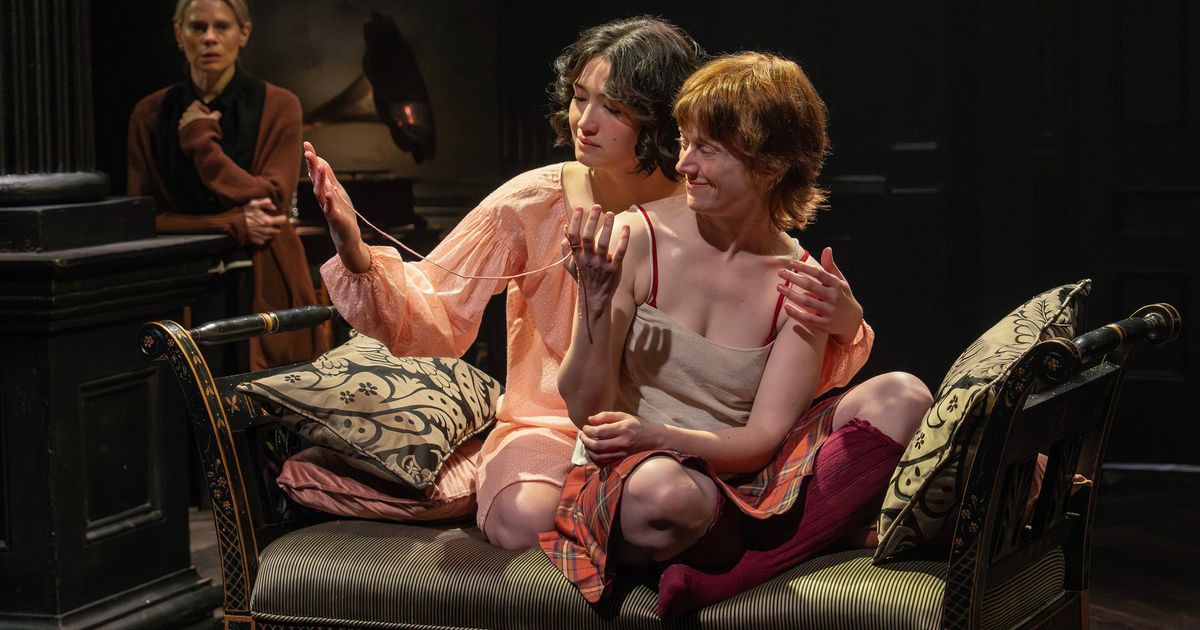
Exploring Antigone's Fight: Anna Ziegler's Timely Public Theater Adaptation
The enduring power of ancient Greek tragedy lies in its capacity to hold a mirror to contemporary society, reflecting universal human struggles through the prism of timeless narratives. Among these, Sophocles' *Antigone* stands as a monumental work, perpetually challenging our understanding of justice, individual conscience, and the rule of law. Now, playwright Anna Ziegler brings this seminal text into sharp, modern focus with her world-premiere adaptation, *Antigone (This Play I Read in High School)*, captivating audiences Off-Broadway at The Public Theater. This profound reimagining, spearheaded by the visionary direction of Tyne Rafaeli, has not only garnered critical acclaim but also seen its initial limited run extended, a testament to its powerful resonance in our current moment. The buzz around
Anna Ziegler's Antigone highlights its significance as a crucial theatrical event, compelling audiences to confront pressing moral questions that echo from ancient Thebes to modern America.
A Modern Lens on an Ancient Tale: Themes and Intent Behind Anna Ziegler Antigone
Anna Ziegler's *Antigone* is far from a mere classical revival; it's a vibrant, urgent reinterpretation that consciously bridges millennia. Ziegler herself articulates her intent, stating she aimed "to capture how absurd, painful, and deeply human it feels to navigate the moral minefields of our moment." This adaptation boldly tackles the core conflict of the original – a young woman defying state authority based on a higher moral imperative – but re-frames it through a distinctly contemporary lens. At its heart, the play explores the journey of "an independent young woman determined to have control of her own body even in a world governed by archaic and misogynist laws."
This central theme is not just timely; it’s critically urgent. In an era grappling with debates over bodily autonomy, individual rights versus state control, and the persistence of systemic injustices, Ziegler's *Antigone* provides a powerful dramatic framework for exploring these complex issues. Director Tyne Rafaeli eloquently describes this approach, noting that Ziegler "pulls this ancient text into our modern moment without gimmick or reduction." Instead, by "channeling what made the original so radical," Ziegler constructs a "singular theatrical world that straddles ancient Thebes and modern America." The play, therefore, becomes a crucial civic discourse, posing the essential question: "what is a citizen to do in the face of an unjust law?"
The brilliance of this adaptation lies in its ability to retain the Sophoclean gravitas while infusing it with a palpable sense of present-day struggle. It’s not just about a historical figure, but about anyone who finds themselves at odds with a system they perceive as unjust. The play invites audiences to consider the personal cost of resistance, the difficult choices leaders face, and the enduring human quest for dignity and justice, making the fight of
Anna Ziegler's Antigone feel incredibly personal and immediate.
The Creative Minds and Stellar Cast Behind the Production
Bringing such a nuanced and ambitious adaptation to life requires a formidable creative team and a stellar cast, and *Anna Ziegler Antigone* certainly delivers. At the helm is director Tyne Rafaeli, known for her incisive and emotionally resonant productions. Rafaeli’s vision aligns perfectly with Ziegler’s, creating a theatrical experience that is both intellectually stimulating and viscerally powerful, utilizing "wild imagination, humor, sophistication, and visceral force." Her ability to blend the ancient and modern, ensuring that the thematic weight of the original is felt alongside the contemporary echoes, is key to the production's success.
The cast features a remarkable ensemble, led by two Tony Award winners who bring significant gravitas to their roles. Celia Keenan-Bolger, a beloved stage veteran, takes on the pivotal role of Chorus, guiding the audience through the moral labyrinth of the narrative. Tony Shalhoub, celebrated for his versatile performances across stage and screen, embodies the formidable figure of Creon, the conflicted leader whose decrees clash with Antigone's conscience.
The titular role of Antigone is played by Susannah Perkins, whose portrayal captures the fierce independence and moral conviction central to the character. Supporting them are a talented group of co-stars who breathe life into the reimagined world:
- Ethan Dubin as Copy 3/Achilles
- Katie Kreisler as Cop 1/Proprieter
- Dave Quay as Cop 2/Palace Guard
- Calvin Leon Smith as Haemon
- Haley Wong as Ismene
Beyond the performances, the production's design elements are crucial in crafting its unique atmosphere. David Zinn's scenic design seamlessly transitions between ancient and modern aesthetics, while Enver Chakartash's costume design further blurs these lines. Jen Schriever's lighting design and Daniel Kluger's sound design and music work in concert to establish the emotional landscape and underscore the dramatic tension, ensuring that the world of *Anna Ziegler Antigone* is as immersive as it is thought-provoking. Claire M. Kavanah's prop management also plays a subtle yet significant role in grounding the production in its dual realities.
Why Anna Ziegler Antigone Resonates Now: A Public Theater Imperative
The choice of The Public Theater as the venue for this world premiere is no accident. Both Anna Ziegler and Tyne Rafaeli emphasize The Public’s unique role as a civic gathering place, echoing the function of theater in ancient Greece. Ziegler notes that The Public is "a theatre that has shaped my imagination for decades and welcomes nuance and conversation," aligning with her hope that audiences will leave with a renewed appreciation for Antigone’s bravery and a deeper understanding of leadership's complexities.
Rafaeli further underlines this connection, stating that for the Greeks, "theatre was a democratic imperative, a space for the public to collectively process their world." In her view, "Today, there is no better home for this play than The Public—one of the last true civic gathering places we have." This ethos makes *Anna Ziegler Antigone* more than just entertainment; it positions it as a vital public forum.
The play's exploration of what happens when individual conscience clashes with state power couldn't be more relevant. From discussions around legislative policies affecting personal autonomy to global movements advocating for human rights against authoritarian regimes, the themes woven into this adaptation are constant fixtures in our daily news cycles. The play allows audiences to collectively grapple with these "moral minefields," fostering dialogue and encouraging critical thought about how we, as citizens, respond to injustice. The immediate extension of its run from March 22 to April 5 signifies not just its artistic merit but also its profound impact and the audience’s urgent desire to engage with its timely message.
Practical Insights for Audiences and Beyond
For those considering experiencing *Anna Ziegler Antigone*, or for anyone interested in the intersection of classic literature and contemporary issues, here are some insights:
- Expect a Thought-Provoking Experience: This is not a passive viewing. The play encourages active engagement with its themes, prompting reflection on personal ethics, societal responsibilities, and the nature of power. Be prepared for a blend of intellectual depth and emotional impact.
- Appreciate the Art of Adaptation: For aspiring playwrights or literary enthusiasts, Ziegler's adaptation offers a masterclass in how to breathe new life into a classic. It demonstrates how to honor the source material's spirit while making it profoundly relevant to a new generation, without resorting to gratuitous modernizations.
- Engage with the Public Theater's Mission: Understand that seeing this play at The Public is participating in a civic tradition. Take advantage of potential post-show discussions or resources that deepen your understanding of the play's context and its connection to current events.
- Consider the "High School" Element: The parenthetical "This Play I Read in High School" in the title is itself a commentary. It prompts audiences to recall their initial encounters with such foundational texts and to reconsider how their understanding might have evolved with age and experience. This meta-theatrical layer adds another dimension to the viewing experience.
- Discuss and Reflect: The strength of this *Antigone* lies in its ability to spark conversation. Whether with fellow theatergoers or in an educational setting, discussing the characters' choices, the implications of Creon's laws, and Antigone's unwavering stand can yield rich insights into our own moral landscapes.
In essence, *Anna Ziegler Antigone* serves as a powerful reminder that the stories of the past are not confined to history books but continue to shape our present and future, particularly when interpreted by perceptive artists like Anna Ziegler and Tyne Rafaeli.
Conclusion
Anna Ziegler's *Antigone (This Play I Read in High School)* stands as a testament to the enduring relevance of ancient narratives when re-examined through a contemporary lens. At The Public Theater, this world-premiere adaptation has skillfully transformed Sophocles' tragedy into a vital and timely discourse on bodily autonomy, unjust laws, and civic responsibility. With a stellar cast led by Tony winners Celia Keenan-Bolger and Tony Shalhoub, and under the astute direction of Tyne Rafaeli, this production offers a deeply human and intellectually stimulating exploration of the "moral minefields of our moment." The extended run is a clear indicator of its profound impact and the urgent need for such reflective and powerful theatrical experiences. Ultimately, *Anna Ziegler Antigone* is more than just a play; it is a crucial conversation, a call to reflect on our own roles in the face of injustice, and a powerful affirmation of theatre’s enduring capacity to hold a mirror to society's most pressing concerns.